

Destinations · CAN
Canada
Known for its breathtaking landscapes and famously friendly people, Canada is also home to some of the world’s top universities. With internationally recognised degrees, moderate tuition costs, and a strong emphasis on safety and inclusion, Canada is a smart and supportive choice for international students.
What you need to know
The Basics →
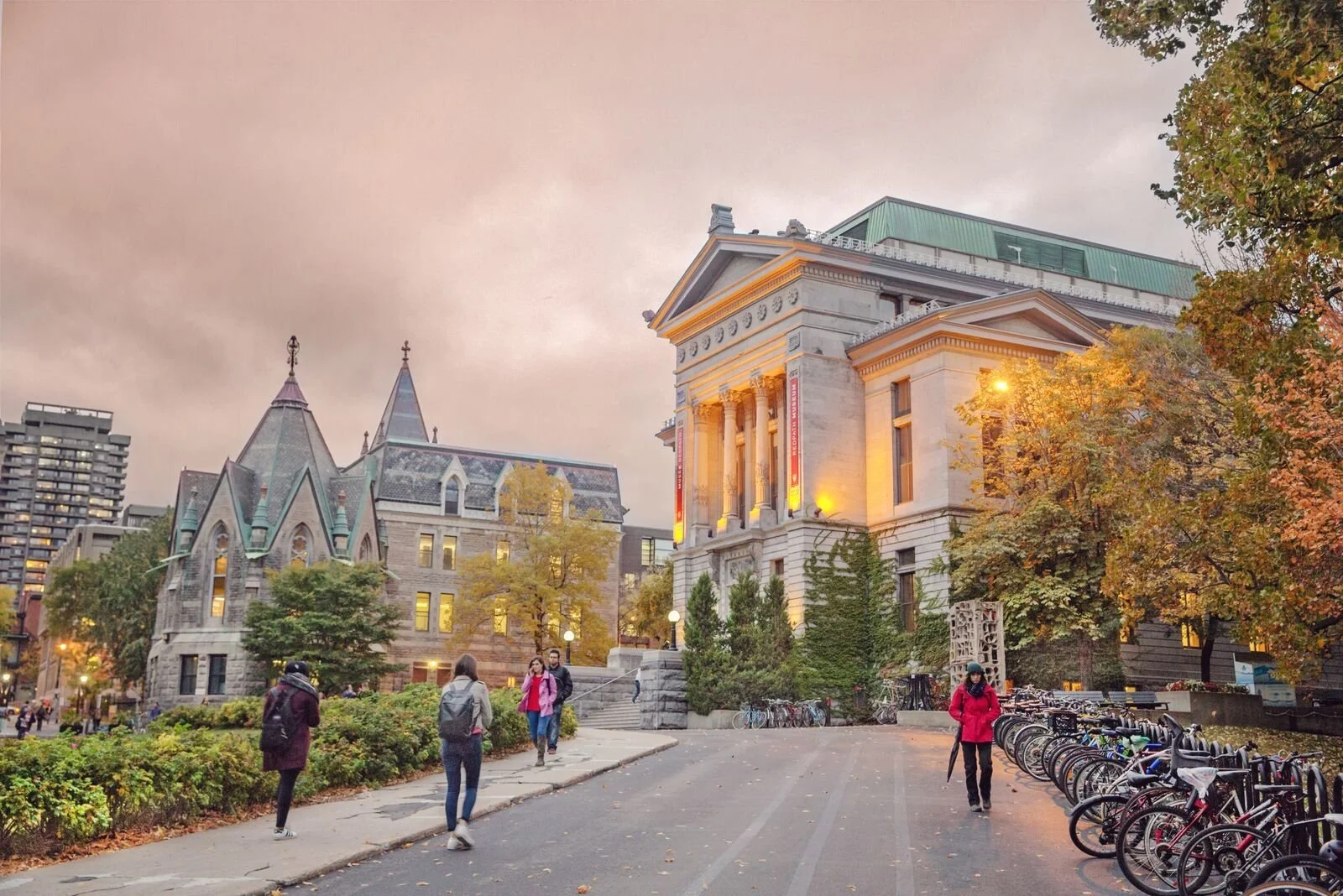
Nearly 100 public and private accredited institutions across all provinces and territories
Tuition is often lower than the US or UK, while degrees are globally recognised
Applications are made direct to universities, or through OUAC in Ontario
Programs are offered in English, French, or both depending on the region
Students can work up to 20 hours per week during term and full-time during breaks
Canada is ranked among the safest countries for international students
Post-graduation work permits (up to 3 years) provide clear pathways to Permanent Residency (PR)
Bachelor’s degrees typically take 3–4 years and are globally recognised
Canada offers exciting athletic opportunities both within the universities and in local outdoor clubs
What’s right for you?
Types of Universities
Public University
The majority of institutions are government-funded and offer a wide range of programs
Private Universities
Fewer in number, often smaller with niche offerings
Research-Intensive Universities
Including members of the U15 Group (e.g. McGill University, University of British Columbia, University of Toronto), recognised globally for research and graduate programs
Teaching-Focused / Regional Universities
Emphasise smaller class sizes, undergraduate teaching, and community connections
Specialist Institutions
Dedicated to fields such as business, technology, or the creative arts
Rankings
2026 QS Rankings have four Canadian universities in the top 50 with two, McGill University (27) and University Toronto(29) sitting towards the top
Similar Pathways
Degrees follow Bachelor/Master/Doctorate - equivalent to USA and Commonwealth countries

Canada Calendar & Applications
Academic Year
September → April/May (Some universities also offer a January intake)
Application Season
October → March (varies by university)
Application Systems
Most universities use direct applications (Ontario universities apply via OUAC – Ontario Universities’ Application Centre)
Entry Requirements
Admission is primarily academic: IB, ATAR, APs, or equivalent senior school results. Language proficiency (English or French) may be required – e.g., IELTS or TOEFL
Tuition & Work Options
International tuition approx. CAD $20,000–$35,000 per year
Students can work up to 20 hours per week during term and full-time during breaks
Post-Graduation Options
Graduates may qualify for a Post-Graduation Work Permit (up to 3 years) providing a pathway to Permanent Residency (PR)